A personalised book for milestones in your child’s life
Big firsts can bring a mix of excitement, questions and a need for a little extra reassurance. A personalised book for milestones lets your child see themselves at the centre of a story shaped around a change they are getting used to. Picture to Story creates a 32-page picture book with 15 illustrated story spreads, using one photo of your child as the reference for their character. You answer a few simple questions about their age, preferred art style, adventure and small details, then see the cover before paying. Choose from storybook watercolour, animated film in 3D, bold cartoon or coloured pencil. The wording is tailored to your child’s age, from babies through to age 10, so the story feels right for the way they enjoy books now.
See 20 story ideas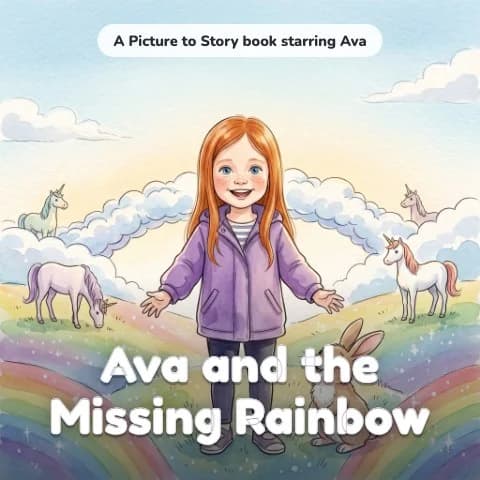
Growing-up firsts book ideas
Pick one to see the story, how the first page could read and who it suits. Each one starts with your child’s photo.
Choosing a story that feels close to home
Start with the change that is most present in your child’s world, rather than trying to cover several at once. Think about what they have been talking about, practising or wondering about lately. A story works best when its details feel recognisable, so include small touches from everyday life when you answer the questions. Choose an art style that suits what your child already enjoys looking at, whether that is soft painted scenes, lively 3D-style pictures, clear cartoon lines or coloured-pencil texture. Keep the tone encouraging and matter-of-fact. The aim is not to make the change seem huge, but to give your child a familiar character to follow through it.
When to read a milestone story
Read the book when there is time to linger over the pictures and chat, rather than only at the busiest point of the day. Before a new experience, it can be a gentle way to introduce the idea without turning it into a lecture. Afterwards, it can become a calm opportunity to look back at what happened and notice what felt easy, funny or unfamiliar. You do not need to read every word on every occasion. Younger children may prefer to point at the illustrations and name what they see, while older children may want to pause over parts that resemble their own experience. Re-reading lets the story stay useful as the change becomes more familiar.
How a personalised story can support conversation
Seeing themselves illustrated in a book gives your child a simple starting point for talking about a growing-up first. Instead of asking direct questions straight away, you can comment on what the character is doing, then wait to see whether your child adds their own thoughts. Try open prompts such as, “What do you think happens next?” or, “Which part looks most like your day?” Let their answers lead the conversation, even if they focus on a tiny detail in the picture. The book does not need to solve every worry or explain every part of a change. It can simply make space for shared reading, familiar words and your attention at a moment when your child is learning something new.
Questions
How is my child included in the book?
Picture to Story uses one photo of your child as the reference for their illustrated character. You also share their age, preferred art style, adventure and a few little details.
Can I see the book before I pay?
You can see the cover free before paying. This gives you a first look at how your child appears in the chosen art style.
What formats are available?
The digital book is ready about 10 minutes after ordering. Printed paperback and hardcover editions are also available, with shipping included.